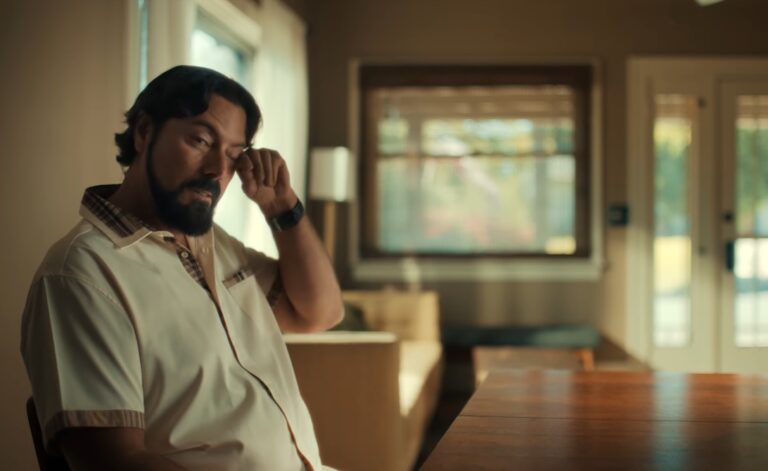
Voicemails for Isabelle Ending Explained: Do Jill and Wes Get Back Together?
Netflix has released plenty of romantic comedies over the years, but Voicemails for Isabelle feels slightly different from the usual formula. Released in 2026, the film pairs Zoey Deutch and Nick Robinson in a story that constantly walks a difficult line between grief and romance. One minute it’s making jokes about disastrous dates and career frustrations. The next, it’s confronting the unbearable silence left behind after losing someone you love.
Directed and written by Leah McKendrick, the movie centers on a relationship that probably shouldn’t work on paper. Yet somehow it does. At least for most of its runtime. The ending, though, has sparked a surprising amount of debate online. Reddit threads, YouTube discussions, and social media reactions all seem to circle around the same questions. Did Jill really forgive Wes? Was the final voicemail enough to repair what happened? And perhaps most importantly, are these two actually together by the time the credits roll?
The answers aren’t quite as simple as a standard romantic comedy might suggest.
A Romance Built on Loss
To understand why the ending lands the way it does, it’s important to go back to where everything started.
Jill, played by Zoey Deutch, is an aspiring pastry chef living in San Francisco. She’s struggling to function after the death of her younger sister Isabelle, who passed away due to complications from cystic fibrosis. Grief has completely reshaped her life. Instead of moving forward, she clings to one ritual that makes her feel connected to Isabelle.
She calls her sister’s old phone number.

Again and again.
The messages she leaves aren’t polished speeches or dramatic monologues. They’re messy. Honest. Sometimes funny. Sometimes devastating. She talks about terrible dates, workplace frustrations, personal failures, and the sadness she can’t seem to escape. The voicemails become a private space where she can still talk to her sister, even though she’s gone.
What Jill doesn’t know is that Isabelle’s phone number has already been reassigned.
It now belongs to Wes, a real estate agent living in Austin.
At first, Wes considers sending a simple text explaining the mistake. That would have been the normal thing to do. Instead, curiosity wins. Then empathy. Then something deeper. He listens to the messages and becomes fascinated by the person behind them. Jill’s honesty, her dark sense of humor, and her emotional openness slowly become part of his daily routine.
Eventually, a temporary work assignment brings Wes to San Francisco. That’s where the situation becomes much more complicated. Rather than immediately revealing who he is and what he knows, Wes uses information from those recordings to orchestrate what appears to be a perfect accidental meeting near the Golden Gate Bridge.
The chemistry between them is immediate.
The problem is obvious.
Wes already knows things about Jill that nobody else does.
Their entire romance is built on a secret.
The Betrayal That Changes Everything
Predictably, the truth doesn’t stay hidden forever.
When Jill discovers that Wes has been listening to the messages she intended for Isabelle, the relationship collapses almost instantly. And honestly, it’s hard to blame her. Those recordings were never casual phone calls. They were deeply personal conversations directed toward the memory of her sister. They represented the one place where grief could exist without judgment.
Finding out that a stranger listened to them is painful enough.
Finding out that same stranger used that knowledge to create a romantic connection feels even worse.
The film doesn’t soften the damage caused by Wes’s actions. That’s one of its strongest decisions. Too many romantic comedies rush through betrayals because they’re eager to reach the happy ending. Voicemails for Isabelle refuses to do that.
Jill walks away.
She doesn’t forgive him immediately. She doesn’t spend the next scene running back into his arms. Instead, she removes him from her life entirely and focuses on herself.
That choice has been one of the most widely praised aspects of the movie among online audiences because it avoids a familiar genre shortcut. The screenplay understands that trust, once broken, needs time. Real time.
Not a montage.
Not a grand gesture.
Time.
Jill’s Healing Journey Happens Without Wes
Following the breakup, the story shifts its attention toward Jill’s personal growth.
Her parents provide financial support using money that had originally been intended for Isabelle’s college education. It’s a bittersweet detail that quietly reinforces the movie’s larger themes about memory and legacy. Rather than allowing that money to sit untouched, Jill chooses to build something meaningful with it.
She leaves her demanding job under a toxic chef and takes a risk on herself.
The result is a dessert and breakfast taco food truck inspired by the comfort foods she and Isabelle always shared together.
The business becomes more than a career move.
It’s an act of remembrance.
It’s also proof that grief can be transformed into something creative rather than destructive. Jill hires a former culinary colleague to help run the operation, and over time the project begins to thrive.
By the time New Year’s Eve arrives, she’s built a successful business, regained a sense of purpose, and found stability on her own terms. The movie repeatedly emphasizes one key point here: Jill’s recovery is not dependent on romance.
She doesn’t need Wes to fix her.
She already fixed herself.
The New Year’s Eve Voicemail Explained
The emotional climax arrives on New Year’s Eve, and it’s one of the film’s strongest sequences.
While dealing with a glitch on her phone, Jill discovers that all of the old voicemails she believed were lost have suddenly been restored. The recordings form a complete archive of her conversations with Isabelle.
Then she notices something new.

At the very end of the voicemail history sits a fresh message from Wes.
This moment works because the screenplay avoids easy excuses. Wes doesn’t spend the recording defending himself. He doesn’t attempt to minimize what he did. He doesn’t offer elaborate explanations designed to make himself look better.
Instead, he apologizes.
Fully.
Without conditions.
Without qualifications.
The voicemail reveals a level of vulnerability that the character has struggled to express throughout the film. He openly admits how deeply he loves Jill, delivering the movie’s most quoted line:
“I love you in a very uncool, desperate, all-consuming kind of way… I know that you don’t need a man, Jill, but I sure as hell need you.”
The recording becomes even more meaningful when Wes speaks directly to Isabelle. He tells her he always wished he had a younger sister and asks for a sign if she can hear him.
It’s a surprisingly delicate scene.
What could have felt manipulative instead comes across as sincere because it acknowledges the sacred nature of Jill’s connection to Isabelle. For the first time, Wes demonstrates that he truly understands what those voicemails represented.
And that realization changes everything.
Jill doesn’t suddenly forget the pain he caused. The movie never suggests that. What it suggests is something more complicated. She has healed enough to make a new choice.
Not out of loneliness.
Not out of dependency.
Out of readiness.
She decides to see him again.
The final scenes leave the future intentionally open, but the implication is clear. Jill and Wes agree to start over, this time without secrets, without hidden knowledge, and without the imbalance that defined their first attempt at a relationship.
How Script Changes Reshaped the Ending
One of the more fascinating details surrounding Voicemails for Isabelle comes from interviews with Leah McKendrick and Zoey Deutch.
The version of Wes audiences ultimately saw on screen wasn’t the version that existed in the earliest drafts.
The project reportedly spent nearly eight years in development before reaching Netflix, and during that process the character underwent significant changes.
Originally, Wes was written as a much more calculating figure. Early screenplay versions reportedly portrayed him as someone who deliberately concealed the truth for much longer and showed considerably less remorse about doing so.
That approach created a problem.
If Wes felt too manipulative, viewers would never support the relationship.
McKendrick and Nick Robinson recognized this during development and worked to make the character more conflicted and emotionally transparent. The finished film repeatedly shows Wes trying to find opportunities to reveal the truth. He’s still wrong. The movie never excuses that. But it also shows genuine guilt long before he’s exposed.
That distinction matters.
A lot.
Another addition that helped reshape audience perception was the Magic: The Gathering subplot. Wes sacrifices an extremely valuable Black Lotus card to help create opportunities for Jill’s future growth. The gesture reinforces the idea that his feelings extend beyond romance and into genuine selflessness.
Without changes like these, the New Year’s Eve reconciliation probably wouldn’t have felt believable.
With them, it mostly does.
Why the Music Matters So Much
The soundtrack deserves its own discussion because the final act relies heavily on music to communicate emotional transitions that dialogue alone couldn’t fully capture.
Throughout the film, songs function almost like emotional bookmarks in Jill’s journey through grief.
Several tracks become particularly important near the ending:
| Song | Narrative Purpose |
|---|---|
| “New Year’s Day” – Taylor Swift | Supports the emotional atmosphere of the New Year’s Eve climax. |
| “marjorie” – Taylor Swift | Reinforces themes of memory, loss, and ongoing connection with loved ones. |
| “Dancing On My Own” – Robyn | Reflects emotional isolation before personal growth. |
| “Beautiful Things” – Benson Boone | Helps shift the tone toward hope and shared possibility. |
The inclusion of “marjorie” feels especially fitting. The song’s themes align almost perfectly with Jill’s relationship to Isabelle and the way memory continues to influence her life long after loss.
By the time the final scenes arrive, the soundtrack has quietly guided the audience from heartbreak toward cautious optimism.
Not certainty.
Optimism.
There’s a difference.
Is Voicemails for Isabelle Based on a True Story? Netflix Rom-Com Real Inspiration Explained
So, Do Jill and Wes End Up Together?
The short answer is yes.
The longer answer is more interesting.
Voicemails for Isabelle doesn’t close with a wedding montage, an engagement scene, or some flash-forward revealing their future decades later. The film deliberately avoids that kind of certainty.
Instead, it ends with a choice.
Jill has already rebuilt her life. Her food truck is thriving. Her sense of purpose has returned. She no longer needs someone else to rescue her from grief because she’s already learned how to live alongside it.
That’s why the final reunion works.
When Jill decides to meet Wes after hearing his voicemail, she’s not choosing dependence. She’s choosing possibility.
The movie’s final message isn’t really about romance at all. It’s about what happens after grief stops consuming every corner of your life. Isabelle’s absence never disappears. The pain doesn’t vanish. The memories remain.
But eventually, if you’re lucky, there’s enough room left for something new.
- Forgiveness.
- Love.
- And another beginning.