Mutiny 2026 Ending Explained: The Shocking International Conspiracy Deep Dive
When Lionsgate paired Jason Statham with director Jean-François Richet, expectations were pretty clear. Fans wanted grounded action, brutal fight choreography, and practical stunt work instead of another CGI-heavy spectacle. Richet had already shown with Plane that he prefers physical tension over digital excess, and Mutiny follows that same philosophy. But once the gunfire settles, the film reveals something much bigger than another Statham revenge story. It leans heavily into political paranoia, borrowing the DNA of The Bourne Identity while echoing the conspiracy thrillers of the 1970s.
At its core, Mutiny is less interested in counting body bags than exposing how power operates behind closed doors. The screenplay constantly shifts between personal survival and institutional corruption, using shipping routes and corporate infrastructure as pieces of a much larger puzzle. Sometimes the exposition slows the pacing, especially during the second act, but those quieter stretches build enough subtext to make the final reveal land with real weight.
The Story Begins with Tibu’s Murder
Cole Reed, played by Jason Statham, isn’t introduced as a typical action hero. He’s a former Special Forces soldier and ex-NYPD officer who now works in private security for billionaire industrialist Tibu. Their partnership ends almost instantly when Tibu is assassinated in front of Cole, leaving him framed for a crime he had no chance of preventing.
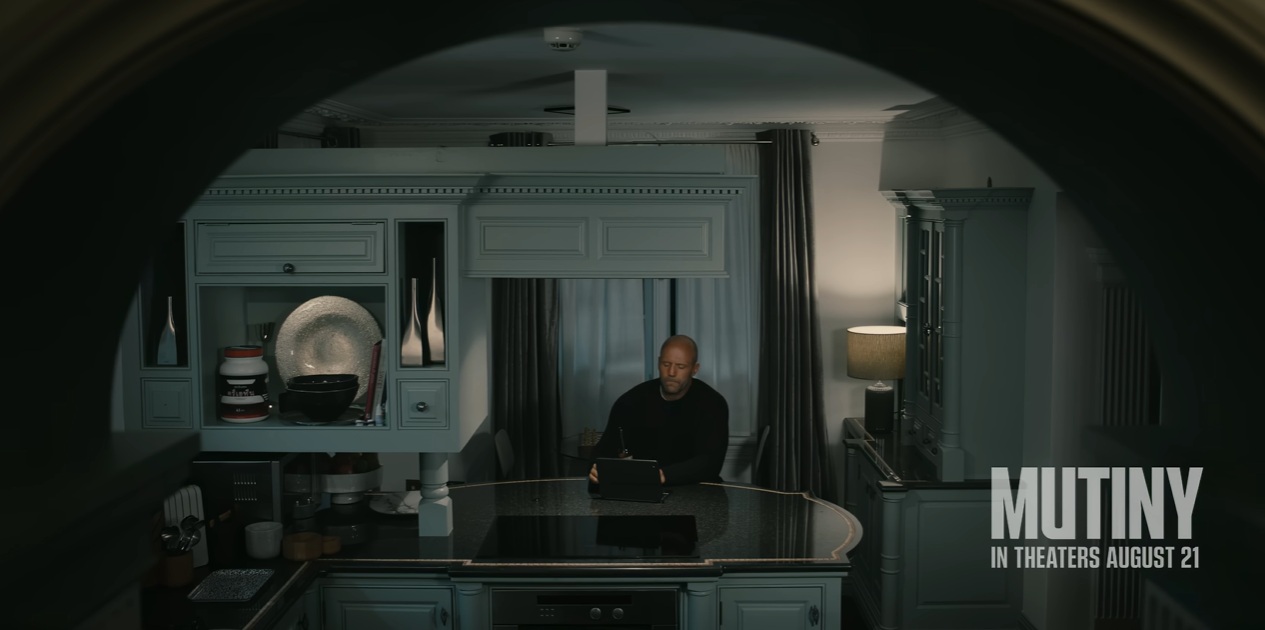
The setup works because the conspiracy isn’t built around personal revenge alone. Tibu had stumbled onto classified evidence exposing an organization known as The Consortium, a network hiding behind legitimate international commerce. According to the film, this syndicate controls shipping routes, manipulates governments, and profits from everything from weapons trafficking to human exploitation.
Instead of quietly removing Tibu, the organization creates a second victim. Cole becomes the ideal scapegoat because of his military background and his direct connection to the murdered billionaire. Digital records disappear, forensic evidence is fabricated, and compromised officials push the investigation exactly where The Consortium wants it to go. Within a single day, Cole transforms from trusted security chief into an international fugitive.
Why the Cargo Ship Matters
The enormous cargo vessel isn’t just another action setting. It’s the film’s central visual motif and arguably its strongest storytelling device. Every cramped hallway and towering steel container reinforces the feeling that Cole has entered a machine built to hide crimes in plain sight.
As he moves deeper into restricted sections of the ship, several discoveries reshape the narrative:
- The crew consists largely of private military contractors rather than civilian sailors.
- Shipping containers conceal illegal weapons, trafficking operations, and encrypted communication hubs.
- The vessel functions almost like a floating jurisdiction-free headquarters for The Consortium.
That concept gives the movie a distinctive identity. Instead of secret underground bunkers or abandoned factories, the conspiracy operates through global commerce itself. It’s a clever idea, even if the script occasionally explains its symbolism a little too directly.
Key Characters Behind the Conspiracy
| Character | Role | Narrative Function |
|---|---|---|
| Cole Reed (Jason Statham) | Framed security specialist | Drives the investigation and action. |
| Annabelle Wallis | Intelligence operative | Connects political intrigue with field operations. |
| Roland Møller | Mercenary commander | Physical antagonist aboard the ship. |
| Arnas Fedaravičius | Consortium strategist | Financial mastermind behind the operation. |
| Adrian Lester & Jason Wong | Institutional insiders | Show how corruption spreads through legitimate organizations. |
The supporting cast gives the conspiracy credibility because every character represents a different layer of institutional failure.
Annabelle Wallis delivers one of the stronger performances in the film. Rather than existing as a sidekick, her character uncovers financial records and intelligence files while realizing her own agency has been compromised. That storyline adds another layer of paranoia, suggesting that no institution can be trusted once The Consortium extends its influence.
Roland Møller serves a different purpose. He’s less concerned with ideology than efficiency. His character exists to stop Cole through brute force, creating several of the movie’s best close-quarters fight sequences. Richet stages these confrontations with minimal visual clutter, allowing the choreography to remain easy to follow.
Arnas Fedaravičius, meanwhile, represents the corporate face of the conspiracy. He rarely gets his hands dirty, but his calm, calculated presence creates an effective contrast with Møller’s direct violence. One controls markets. The other controls guns.
The Ending Explained
The third act abandons investigation in favor of relentless forward momentum. After spending much of the film hiding, Cole finally takes control of the cargo ship, turning the hunters into the hunted. The action becomes increasingly tactical, with improvised explosives, close-quarters combat, and careful use of the ship’s maze-like layout.
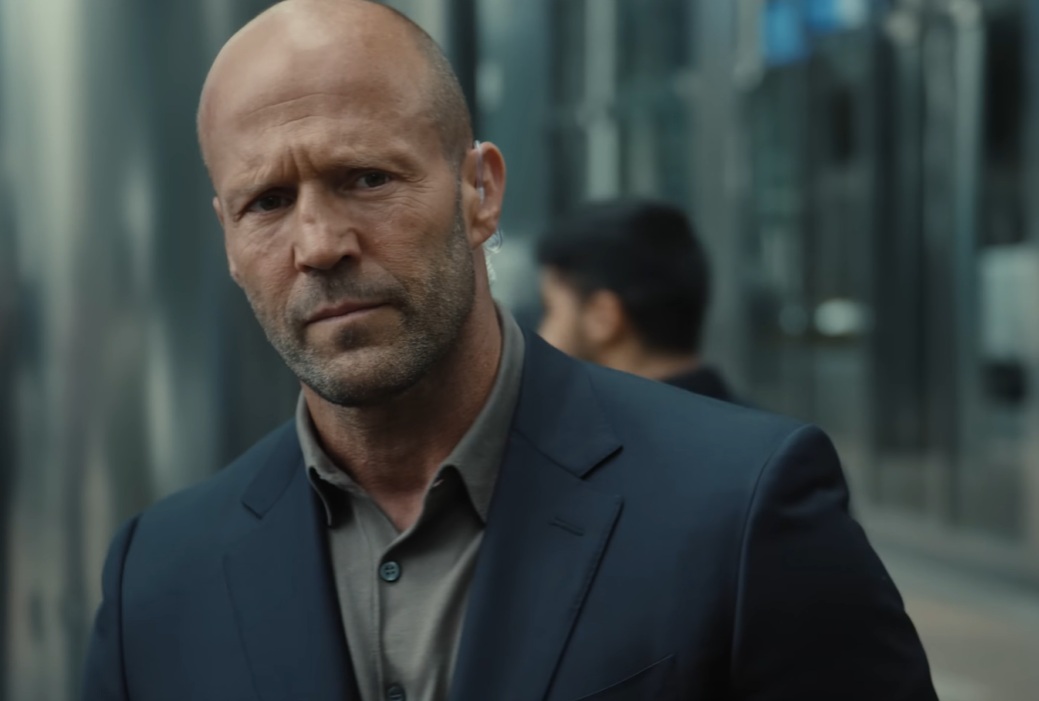
The real turning point isn’t another fight scene. It’s the discovery of the ship’s encrypted database.
Working alongside Annabelle Wallis remotely, Cole accesses files that expose the full scale of The Consortium’s operation. The organization hasn’t simply profited from illegal trade. According to the recovered data, it has manipulated supply shortages, financed regional conflicts, and engineered economic instability to maximize corporate influence across global shipping networks.
That revelation also explains Tibu’s assassination. He wasn’t killed because he threatened one executive or one company. He threatened an entire financial ecosystem built on secrecy.
The biggest twist arrives when Cole realizes that government agencies were never just infiltrated by The Consortium. Some officials actively approved its operations, using private shipping routes to support covert missions that bypassed legal oversight altogether. It’s an ambitious reveal, although the screenplay arguably stacks one conspiracy on top of another until credibility begins to stretch.
Cole’s Final Decision
The climax takes place on the rain-soaked deck of the cargo ship, where Richet returns the story to straightforward physical conflict after so much political intrigue. Cole defeats the remaining mercenaries while transmitting every classified file to independent journalists, whistleblower organizations, and judicial authorities at the same time.
That decision matters because it removes any opportunity for corrupt intelligence agencies to bury the evidence. Instead of trusting official channels, Cole forces the information into public view before anyone can suppress it.
The ship is destroyed during the final confrontation, eliminating much of The Consortium’s physical infrastructure. Cole survives, disappearing into the darkness before authorities can reach him. It’s an ending that clearly leaves room for a sequel, but it also fits the film’s recurring theme: once institutions become compromised, justice has to come from outside the system.
Themes That Carry the Film
What gives Mutiny some staying power isn’t simply the action. It’s the anxiety running underneath nearly every scene. The movie taps into concerns about fragile supply chains, multinational corporations, and the difficulty of regulating international waters.
The screenplay argues that modern power doesn’t always wear a military uniform. Sometimes it operates through logistics companies, financial networks, and legal loopholes that most people never notice. Whether viewers buy into that premise depends on how much they accept the film’s increasingly expansive conspiracy, but the idea remains compelling throughout.
Several themes stand out:
- Corporate influence replacing governmental accountability.
- International waters functioning as legal blind spots.
- Information becoming more valuable than military strength.
- Individual morality colliding with institutional corruption.
Those ideas elevate Mutiny above a routine Statham action vehicle, even if the script occasionally reaches too far. The pacing wobbles during exposition-heavy scenes, and some late twists feel designed to escalate the stakes rather than deepen the story. Still, Richet keeps the tension intact through sharp visual storytelling, disciplined action direction, and a protagonist whose motivations remain refreshingly straightforward.
By the final frame, Cole Reed isn’t portrayed as an invincible superhero. He’s simply the last person willing to expose a system everyone else has learned to protect. That grounded character dynamic gives the ending far more impact than the explosions surrounding it.